Dheeru
-

Are we alone in the universe?
For the longest time, belief in extraterrestrial life was considered a fringe viewpoint, more suitable for sci-fi conventions and fans of Star Trek or the X-Files. Today, it’s the exact opposite. Those who reject the notion of alien life are considered to be the outliers. This change in attitude occurred for several reasons, perhaps none as important as the discovery that exoplanets are everywhere — 100 billion of them in the Milky Way galaxy alone. Surely, with so many opportunities for life to flourish, the universe must be teeming with extraterrestrials. But is it? Other than Earth, there’s almost certainly…
-
Is religion helping or hurting us?
Believers and non-believers alike agree on at least one thing: religion has had a tremendous influence on the history of humanity. But they generally disagree on everything else. Has religion been a net benefit or net cost to society? Are believers healthier and happier than non-believers? Can religion and science get along, or are they forever at odds? What truths, if any, can we learn from religion? Does God even exist? These questions have been debated for years, some for millennia. Here, you will see what the world’s smartest thinkers have to say about them.
-

Why are there conspiracy theories?
Stolen elections. Phony pandemics. Faked moon landings. Lizard people. It’s not just Americans who love a good conspiracy theory; it seems to be a trait shared by humans everywhere. It is a curious paradox that in the Age of Information — when all of our acquired knowledge is available at the click of a button or the tap of a screen — that we should choose to believe lies and fiction rather than truth and facts. Why? The answer involves a combination of psychology, widespread distrust, and malevolent actors. Propaganda has existed since humans were able to speak and write,…
-
Should we trust science?
Science is given a privileged position in society. It is widely thought to be the ultimate arbiter of what constitutes true and false beliefs. Those who hold such a position claim that real-world problem-solving and technological advances are proof that science works. But there are objections. Yes, science can extend our lives with modern medicine, but it can also end them prematurely with nuclear bombs. Science and technology can make us wealthier, but they can’t fix inequality. In this age of widespread mistrust of authority, we may first need to answer a very basic question: Should we trust science?
-
Do we have free will?
Free will remains a hotly debated philosophical question today, as we have no means of proving or disproving it using the scientific method. Are all of our actions causally predetermined, and hence not free, or are we in fact free agents in charge of our decisions? Modern thinkers like Sam Harris espouse the view of scientific determinism, suggesting that free will is a lie that we tell ourselves as a society, which can lead to dangerous consequences like excessive blame being placed on an individual for actions that can be explained by environmental pressures. Meanwhile philosopher Daniel Dennett, as a compatibilist, might suggest that free…
-
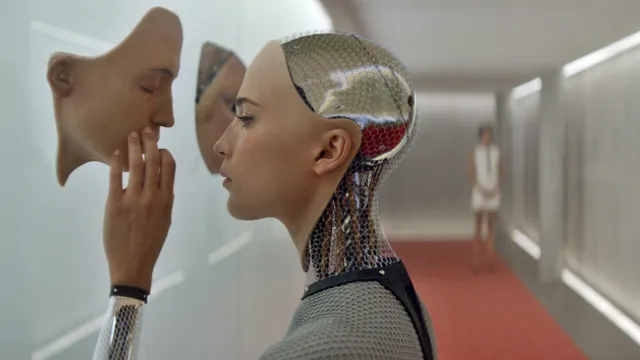
Will true AI turn against us?
Artificial intelligence is already everywhere. From Amazon product suggestions to Google auto-complete, AI has invaded nearly every aspect of our lives. The trouble is that AI just isn’t very good. Have you ever had a meaningful conversation with Siri or Alexa or Cortana? Of course not. But that doesn’t mean it always will be this way. Though it hasn’t quite lived up to our expectations, AI is definitely improving. In a utopian version of an AI-dominated future, humans are assisted by friendly, all-knowing butlers that cater to our every need. In the dystopian version, robots assert their independence and declare…
-
Collaboration masterclass: How to wrangle disagreements like Bob from Xerox
Excerpted from The Bonfire Moment: Bring Your Team Together to Solve the Hardest Problems Startups Face by Martin Gonzalez and Joshua Yellin. Copyright © 2024 by Martin Gonzalez and Joshua Yellin. Reprinted courtesy of Harper Business, an imprint of HarperCollins Publishers. Leaders need to invite disagreement, not just expect it. When the invitation to offer their opinion is not clear, teams will assume you don’t want it. Leaders often don’t realize that their status can unconsciously silence dissent. No matter how often leaders stress that no one will be punished for disagreeing, their own zeal, conviction, intelligence, and energy can be intimidating. The classic…
-

How to get your ethically sourced pleasure
Pleasure is a dirty word. I mean this in two ways. First are the connotations or associations of the word. If a colleague asked you, “How much pleasure have you had this morning?” you might fire off an email to HR. If you saw the title “Learning to find pleasure,” or “Enjoy more pleasure,” you’d probably expect it to be in the roped-off section of the bookshop. Pleasure is frequently associated with the erotic. But second, pleasure is a dirty word because, across a variety of religious traditions and over several millennia of philosophical thought, “pleasure” has often been seen…
-

Google fellow: AI doesn’t pretend to be intelligent. It is.
Much of the ongoing discourse surrounding AI can largely be divided along two lines of thought. One concerns practical matters: How will large language models (LLMs) affect the job market? How do we stop bad actors from using LLMs to generate misinformation? How do we mitigate risks related to surveillance, cybersecurity, privacy, copyright, and the environment? The other is far more theoretical: Are technological constructs capable of feelings or experiences? Will machine learning usher in the singularity, the hypothetical point where progress will accelerate at unimaginable speed? Can AI be considered intelligent in the same way people are? The answers…